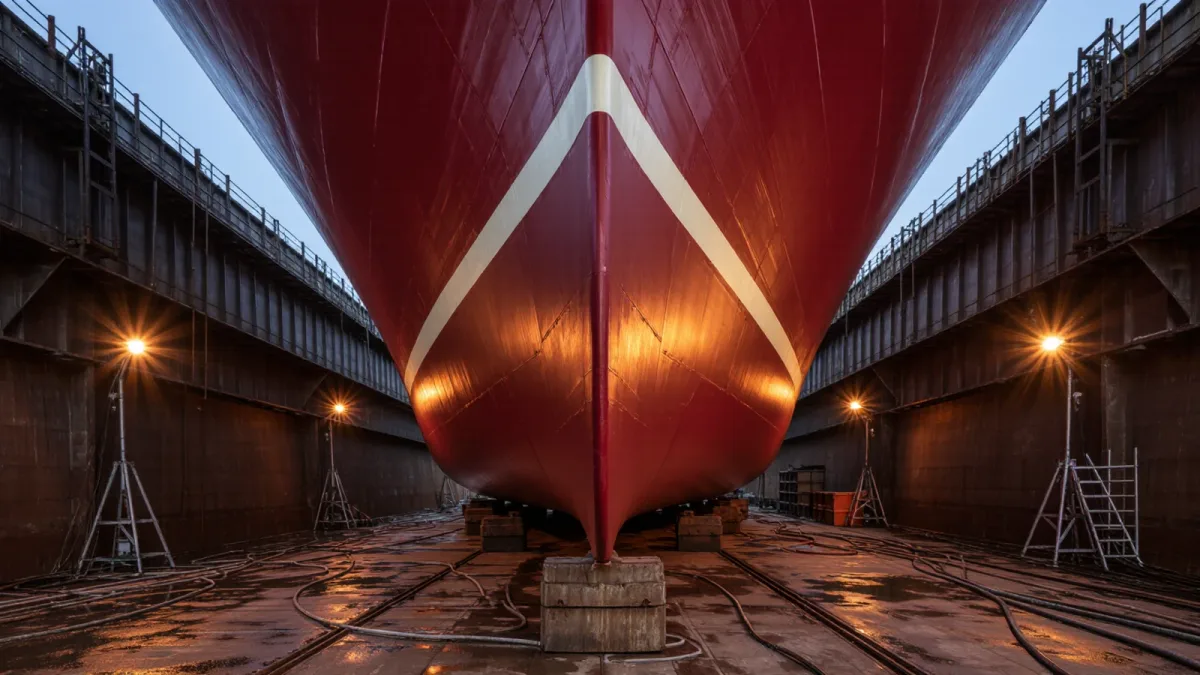
Barnacles and slime cost navies measurable speed and fuel; the answer is a layered regime of antifouling paints, foul-release silicones, and disciplined dry-dock cycles.
CEC merges the radar tracks of an entire force into one fire-control-quality picture, and with NIFC-CA it lets a destroyer engage an over-the-horizon target it never saw itself.
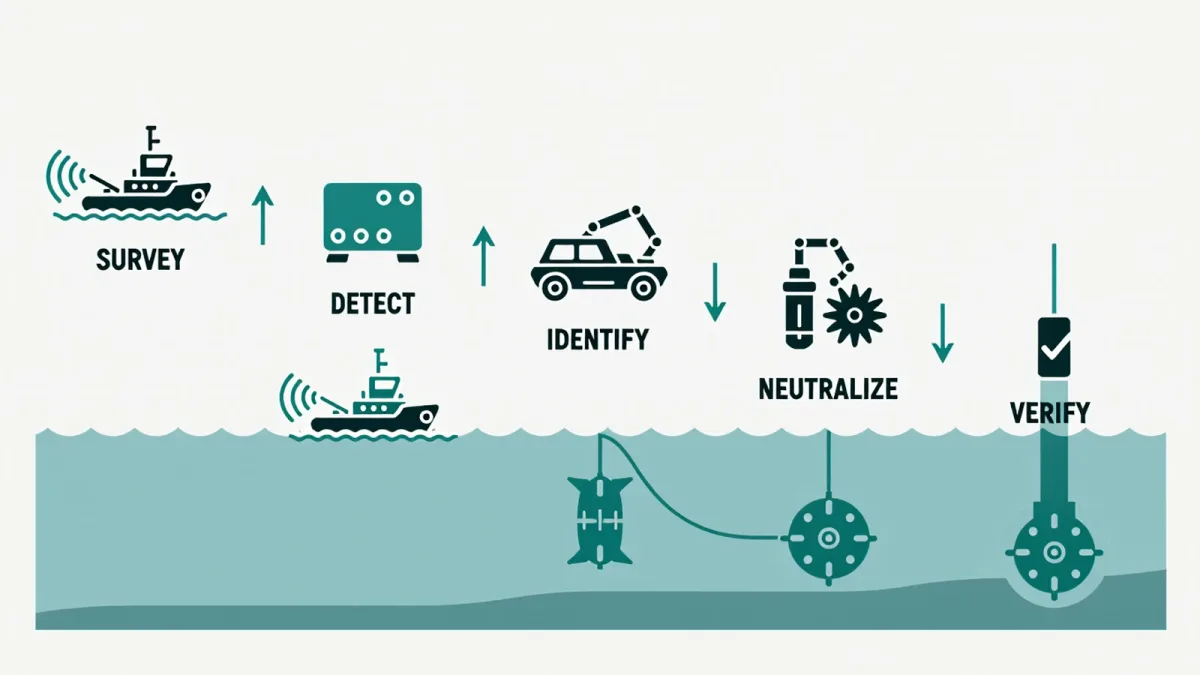
Countering sea mines once meant manned ships sweeping exposed water; the U.S. Navy now hunts them with sonar-carrying underwater vehicles and neutralizes them from helicopters.
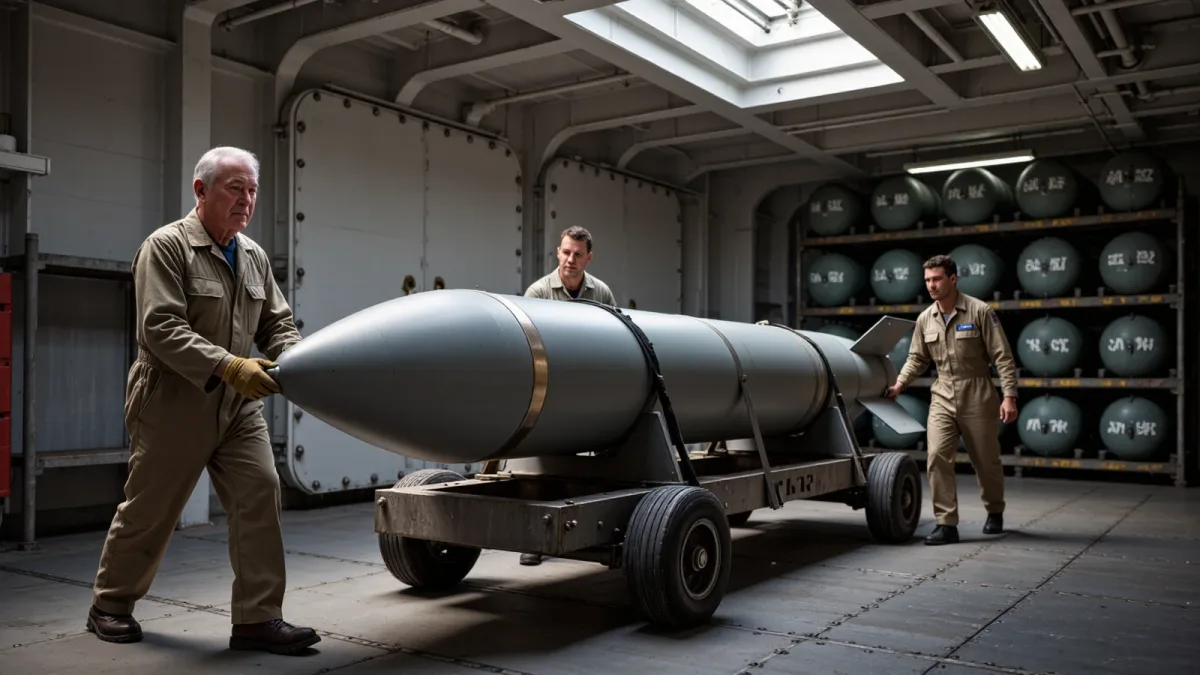
Five decades after its first flight, Tomahawk remains the U.S. Navy's long-range land-attack standard, now upgraded as Block V with new seeker options and growing export demand.
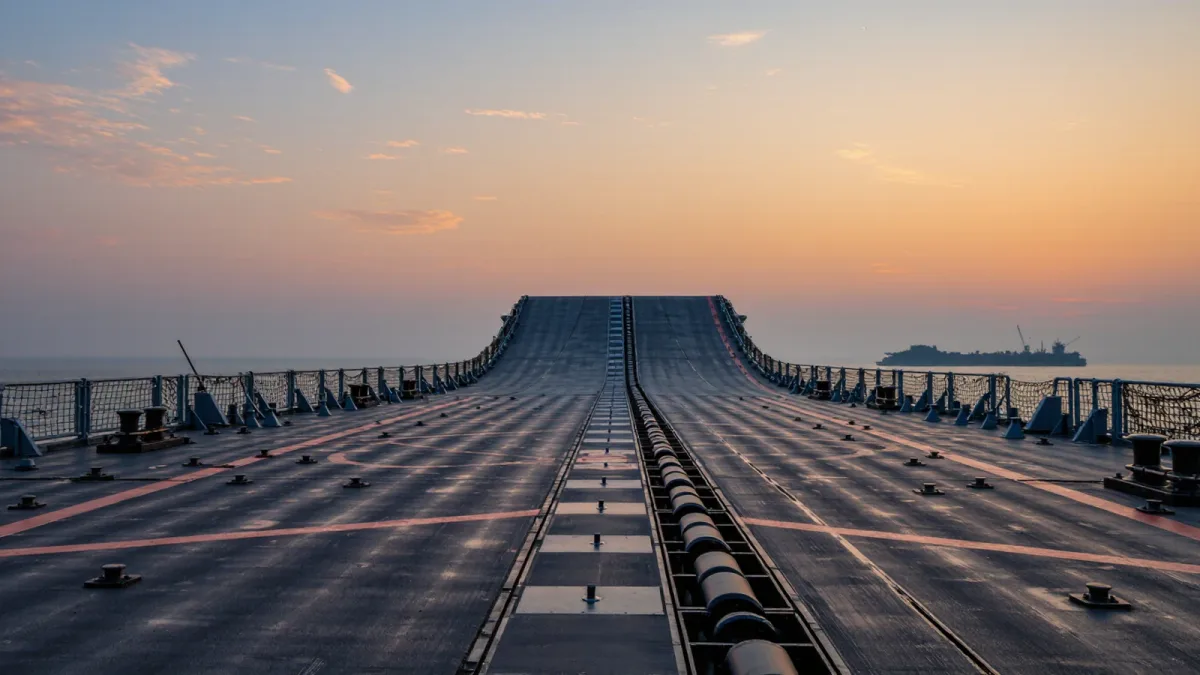
The Electromagnetic Aircraft Launch System uses a linear induction motor and stored electrical energy to fling aircraft off a deck, trading steam for precision control over the launch stroke.
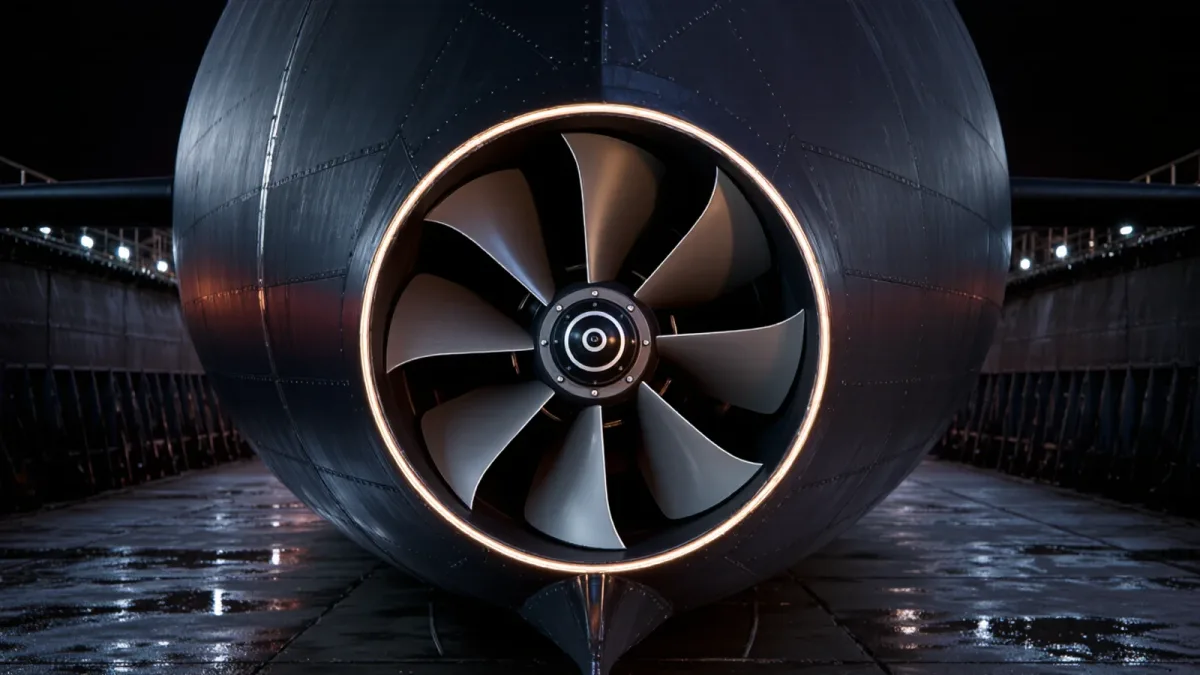
A submarine survives by not being heard, and every major design choice, from engine mounts to the propulsor, exists to keep its acoustic signature below the sea's own noise floor.